MBBS in Serbia is fully compliant with the latest NMC guidelines and is recognized by leading medical organizations including WHO, FAIMER, and other international medical bodies. Serbia is becoming an increasingly popular destination among Indian students due to its affordable tuition fees, high-quality education, modern infrastructure, and globally recognized medical universities.
Students studying MBBS in Serbia receive practical clinical exposure, experienced faculty support, and internationally accepted medical degrees. After graduation, students are eligible to appear for licensing examinations such as FMGE/NExT, USMLE, PLAB, and other medical licensing exams depending on the country where they wish to practice.
Serbia has become an attractive destination for Indian students who wish to pursue MBBS in Europe. The country offers English-medium medical programs, modern teaching hospitals, experienced faculty, and affordable tuition fees compared to many Western European countries. Medical universities in Serbia follow European education standards and provide extensive practical training throughout the course. [oai_citation_attribution:2‡Embassy of India, Belgrade](https://eoibelgrade.gov.in/eoibl_pages/NTQy?utm_source=chatgpt.com)
Indian students must qualify NEET to be eligible for admission and to remain eligible for medical registration in India under the applicable NMC regulations. The MBBS (Doctor of Medicine) program generally lasts six years, including clinical training and internships. [oai_citation_attribution:1‡Embassy of India, Belgrade](https://eoibelgrade.gov.in/eoibl_pages/NTQy?utm_source=chatgpt.com)
Serbia offers a safe environment, affordable living expenses, multicultural campuses, and globally recognized medical degrees. Graduates can pursue licensing examinations such as NExT/FMGE (subject to applicable regulations), USMLE, PLAB, and other international licensing pathways depending on the country where they intend to practice. [oai_citation_attribution:0‡Medbound Times](https://www.medboundtimes.com/college-institute/mbbs-in-serbia-fees-universities-admission-guide-indian-students?utm_source=chatgpt.com)
Why Serbia is becoming a preferred destination for Indian medical aspirants.
Medical universities are recognized by WHO, FAIMER, and other international organizations.
Most universities offer MBBS programs in English for international students.
Students receive practical exposure in advanced hospitals and healthcare centers.
Tuition fees and living expenses are comparatively affordable than many European countries.
The course includes academic education along with clinical internship and practical training.
Graduates can pursue licensing exams such as NExT/FMGE, USMLE, PLAB, and others subject to local regulations.
Serbia offers a secure, peaceful, and student-friendly environment for international students.
Universities provide hostel facilities and affordable private accommodation options.
Basic admission requirements for Indian students.
The applicant must be at least 17 years old on or before 31st December of the admission year.
Students must have completed 10+2 (Class 12) from a recognized board.
Physics, Chemistry and Biology must be compulsory subjects along with English.
General category: 50% in PCB.
Reserved category: 40% in PCB
(as applicable).
Indian students should qualify NEET-UG to remain eligible for medical registration in India under applicable NMC regulations.
Students should have a good command of English, as many Serbian medical universities teach the MBBS program in English.
Important NEET eligibility guidelines for Indian students.
Indian students must qualify the NEET-UG examination to pursue MBBS in Serbia and remain eligible for medical registration in India.
General: 50th Percentile
SC/ST/OBC: 40th Percentile
General-PwD: 45th Percentile
A valid NEET qualification is required before taking admission to a foreign medical university if you intend to practice medicine in India.
Students should choose a medical university and course that comply with the applicable NMC Foreign Medical Graduate regulations.
After completing MBBSabroad, graduates must fulfill India's applicable licensing requirements before practicing in India.
Carry your NEET scorecard, Class 10 & 12 mark sheets, passport, photographs, and other university-required documents during admission.
Leading medical universities in Serbia preferred by international and Indian students.
| # | University | City | Established | Medium |
|---|---|---|---|---|
| 1 | University of Belgrade – Faculty of Medicine | Belgrade | 1905 | English |
| 2 | University of Novi Sad – Faculty of Medicine | Novi Sad | 1960 | English |
| 3 | University of Niš – Faculty of Medicine | Niš | 1960 | English |
| 4 | University of Kragujevac – Faculty of Medical Sciences | Kragujevac | 1977 | English |
| 5 | Military Medical Academy – University of Defence | Belgrade | 2009 | English |
One of the oldest and most prestigious medical universities in Serbia.
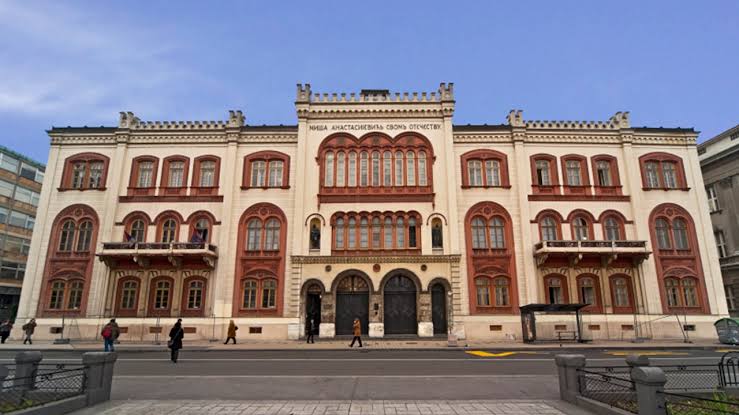
The University of Belgrade Faculty of Medicine is Serbia's oldest and one of its most respected medical schools. Established in 1920, it offers high-quality medical education, modern laboratories, advanced research facilities, and extensive clinical training through affiliated teaching hospitals. The university welcomes international students and offers a Doctor of Medicine (MD) program in English. [oai_citation_attribution:0‡studiesinenglish.med.bg.ac.rs](https://studiesinenglish.med.bg.ac.rs/about/faculty-of-medicine-today?utm_source=chatgpt.com)
1920
Belgrade, Serbia
6 Years
English
Doctor of Medicine (MD)
University Hospitals
One of Serbia's leading medical institutions offering high-quality medical education for international students.
The University of Novi Sad – Faculty of Medicine was established in 1960 and is one of the most prestigious medical universities in Serbia. The Faculty has offered an English-language Medicine program since 1993 and provides modern laboratories, experienced faculty members, simulation centers, and extensive clinical training in affiliated teaching hospitals. The university is known for its strong academic standards, research activities, and international student community.
1960
Novi Sad, Serbia
6 Years
English
Doctor of Medicine (MD)
University Teaching Hospitals
Students from many countries study here every year.
Modern Labs, Library, Research Center & Student Hostel
One of Serbia's leading public medical universities offering internationally recognized medical education.
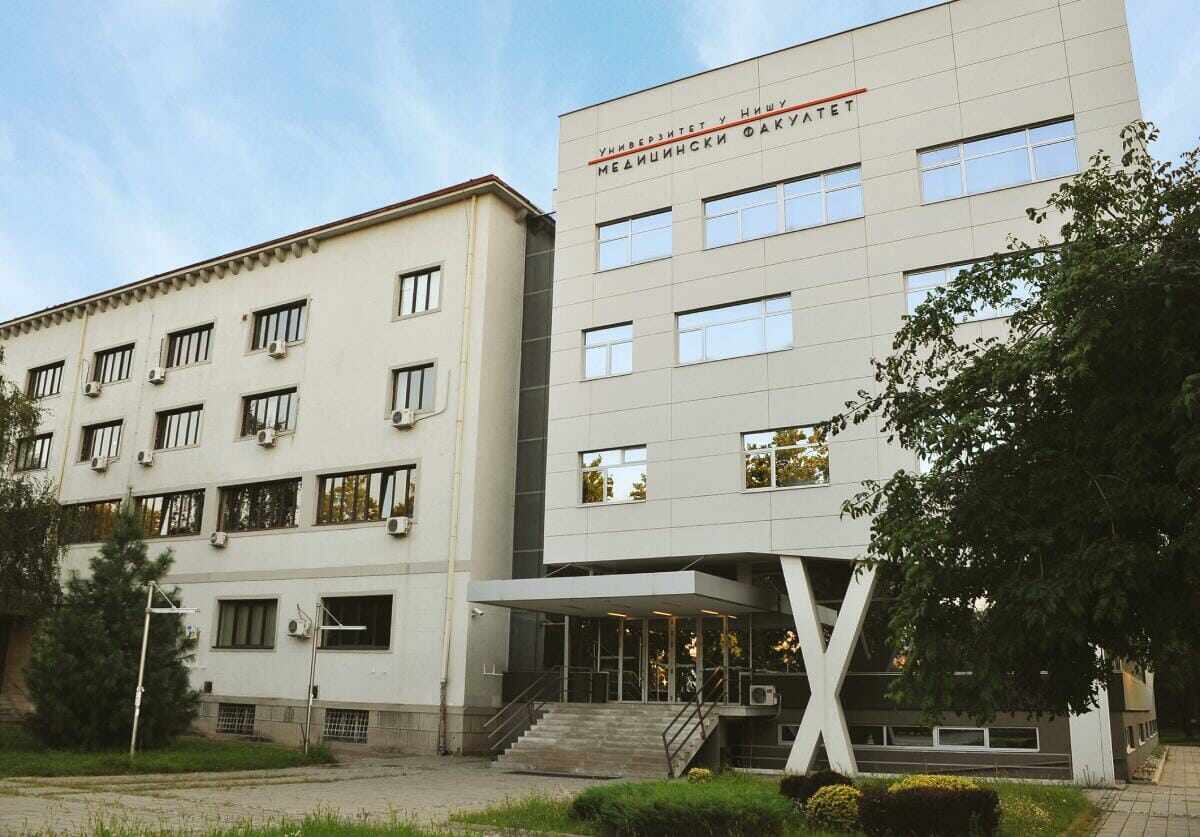
The University of Niš – Faculty of Medicine was established in 1960 and is one of the leading public medical institutions in Serbia. The faculty offers a 6-year Doctor of Medicine (MD) program in English for international students. The curriculum follows European higher education standards (360 ECTS) and combines classroom learning with extensive practical and clinical training in affiliated teaching hospitals.
1960
Niš, Serbia
6 Years
English
Doctor of Medicine (MD)
University Teaching Hospitals
360 ECTS
Modern Laboratories, Library, Research Centre & Student Hostel
A modern public medical university in Serbia offering internationally recognized medical education.
The Faculty of Medical Sciences, University of Kragujevac is one of Serbia's leading public medical institutions. Established in 1977, the faculty is known for its modern teaching methods, research excellence, and clinical education. It offers a 6-year Integrated Academic Studies of Medicine (MD) in English for international students, combining theoretical knowledge with practical training in affiliated teaching hospitals.
1977
Kragujevac, Serbia
6 Years
English
Doctor of Medicine (MD)
University Clinical Centre
Integrated Academic Studies (360 ECTS)
Modern Laboratories, Library, Research Centre, Student Hostel & Simulation Labs
Students must keep the following documents ready for admission and visa processing.
Original and photocopies for age and academic verification.
Must include Physics, Chemistry, Biology and English subjects.
Mandatory for Indian students who intend to obtain medical registration in India after graduation.
A passport with sufficient validity for admission and visa purposes.
Recent white-background passport-size photographs.
Birth certificate as proof of age and identity (if required by the university).
Medical certificate confirming the student is fit to pursue higher education.
Official admission/offer letter issued by the Serbian medical university.
Valid international health insurance for the duration of the stay.
Bank statement or financial documents showing the ability to cover tuition and living expenses.
Completed visa application form, visa fee receipt, and supporting documents.
Some universities require academic documents to be translated and notarized in Serbian.
Medical degrees from Serbian universities are recognized by several international organizations, subject to the requirements of each authority.
Many Serbian medical universities are listed in the World Directory of Medical Schools (WDOMS), supporting international recognition.
Indian students should ensure that the university and course comply with the latest NMC Foreign Medical Graduate Regulations before admission.
Serbia's national medical education accreditation system has received WFME Recognition Status, supporting international quality standards.
Graduates from eligible Serbian medical schools may pursue ECFMG certification if all applicable eligibility requirements are met.
Medical education follows the European Credit Transfer and Accumulation System (ECTS) and Bologna Process standards.
Graduates may pursue postgraduate studies or licensing pathways in different countries, subject to each country's licensing regulations.
The MBBS (Doctor of Medicine) program in Serbia is generally completed over 6 years (12 semesters), combining pre-clinical, para-clinical, and clinical medical education.
| Year | Major Subjects |
|---|---|
| 1st Year | Human Anatomy, Histology, Embryology, Medical Biology, Biophysics, Medical Chemistry, Medical Ethics, Medical English |
| 2nd Year | Physiology, Biochemistry, Microbiology, Immunology, Epidemiology, Genetics, Basic Clinical Skills |
| 3rd Year | Pathology, Pathophysiology, Pharmacology, Radiology, Clinical Propedeutics, Forensic Medicine |
| 4th Year | Internal Medicine, General Surgery, Neurology, Psychiatry, Dermatology, Infectious Diseases |
| 5th Year | Pediatrics, Obstetrics & Gynecology, Orthopedics, Ophthalmology, ENT (Otorhinolaryngology), Anesthesiology |
| 6th Year | Clinical Rotations, Emergency Medicine, Family Medicine, Elective Subjects, Clinical Internship, Final State Examination |
Most Serbian medical universities offer one main admission intake each academic year. Some universities may also conduct an additional intake depending on seat availability.
| Admission Stage | Tentative Timeline | Details |
|---|---|---|
| Application Starts | January – July | Students can begin submitting online applications and required documents. |
| Document Verification | February – August | Universities verify academic records, passport, and other required documents. |
| Entrance Exam / Interview | June – September | Conducted by the respective university (where applicable). |
| Admission Letter | July – September | Eligible students receive the official admission/offer letter. |
| Visa Process | July – September | Students apply for a Serbian student visa after receiving the admission letter. |
| Course Commencement | September – October | The academic session generally begins during September or October. |
| Late Intake (If Available) | October – November | Some universities may offer a second intake if seats remain vacant. |
Admission schedules may vary from one Serbian medical university to another. Students are advised to apply early to secure their preferred university and complete the visa process on time.
Graduates of Serbian medical universities can explore a wide range of career opportunities in healthcare, research, education, and public health, subject to the licensing requirements of the country where they wish to practice.
Work as a doctor in hospitals and healthcare institutions after fulfilling the licensing requirements of the respective country.
Pursue specialization in various medical disciplines through postgraduate programs.
Appear for licensing examinations such as USMLE, PLAB, AMC, or other country-specific licensing pathways.
Join research institutes, pharmaceutical companies, or clinical research organizations.
Build a career as a lecturer or professor after obtaining the required postgraduate qualifications.
Work in medical affairs, pharmacovigilance, drug development, or healthcare consulting.
Contribute to government health departments, NGOs, and international healthcare organizations.
Establish a private clinic after meeting the legal and professional licensing requirements.
Most Serbian medical universities offer MBBS (Doctor of Medicine) programs in English for international students, making it easier for Indian students to study without learning Serbian before admission.
Many leading medical universities offer complete MBBS programs in English for international students.
Students are taught by qualified professors, researchers, and experienced medical practitioners.
Practical training in hospitals helps students communicate with patients and develop clinical skills.
The curriculum follows European medical education standards with a strong focus on practical learning.
Basic Serbian language classes are generally provided to help students interact with local patients during clinical practice.
Students from different countries study together, creating a multicultural academic environment.
A comparison to help students understand the key differences between pursuing MBBS in India and Serbia.
| Parameters | MBBS in India | MBBS in Serbia |
|---|---|---|
| Course Duration | 5.5 Years (Including Internship) | 6 Years (Including Clinical Training) |
| Admission Process | Highly Competitive through NEET & Counseling | University Admission Process (NEET required for Indian students intending to practice in India) |
| Entrance Exam | NEET-UG Mandatory | University Entrance Exam/Interview (varies by university) |
| Medium of Teaching | English | English |
| Annual Tuition Fee | Varies by Government & Private Colleges | Generally Lower than many Western European medical schools (varies by university) |
| Living Cost | Depends on City | Affordable for International Students |
| Clinical Exposure | Government & Private Hospitals | University Teaching Hospitals |
| Degree Awarded | MBBS | Doctor of Medicine (MD) |
| International Recognition | NMC Recognized Colleges | Recognized Universities listed in international directories; students should verify NMC compliance where applicable. |
| Post-Graduation Options | MD/MS, Government Jobs, Private Practice | Specialization, Research, International Licensing Exams (subject to eligibility) |
The National Medical Commission (NMC) Foreign Medical Graduate Licentiate (FMGL) Regulations have introduced important requirements for Indian students pursuing MBBS in Serbia. Students should ensure that their chosen university and medical program comply with these regulations before taking admission.
The medical course should have a minimum duration of 54 months, followed by the required internship as per NMC regulations.
The complete MBBS program should be taught in the English language for Indian students.
The internship should be completed in accordance with the applicable NMC regulations and the requirements of the foreign medical institution.
Indian students should qualify NEET before admission to remain eligible for registration in India under the applicable rules.
The medical degree should be recognized for medical registration in the country where the university is located.
The curriculum should include theory, practical training, and clinical subjects comparable to the Indian MBBS program.
Graduates must satisfy the licensing requirements applicable in India before they can practice medicine.
Before admission, verify that the Serbian university and its MBBS program comply with the latest NMC FMGL Regulations.
Indian students pursuing MBBS in Serbia can explore government, university, and international scholarship opportunities. Scholarship availability, eligibility, and benefits vary by program and university.
A Government of Serbia scholarship that may cover tuition fees, accommodation, meals, health insurance, and a monthly allowance for eligible international students.
Some Serbian universities offer merit-based scholarships or tuition fee reductions for outstanding international students.
Scholarships may be available under educational cooperation agreements between Serbia and partner countries, subject to eligibility.
Students with excellent academic performance may qualify for merit scholarships offered by universities or educational organizations.
Selected universities may provide partial tuition fee waivers based on academic achievement or financial need.
Students can also explore scholarships from international organizations, educational foundations, and exchange programs.
Scholarship availability changes every academic year. Students should check the official university website and the Government of Serbia scholarship announcements for the latest eligibility criteria, deadlines, and application procedures before applying.
Serbia is a beautiful Southeast European country known for its rich history, quality education, affordable living costs, and welcoming culture. It has become a popular destination for international students pursuing higher education, including MBBS.
Belgrade
Southeast Europe (Balkan Peninsula)
Approximately 6.6 Million
Serbian
Serbian Dinar (RSD)
Central European Time (CET)
Continental climate with warm summers and cold winters.
Belgrade Nikola Tesla Airport
Modern hospitals and medical institutions offering excellent clinical exposure.
Serbia follows the Bologna Process and offers globally recognized higher education.
Affordable compared to many other European countries.
Serbia is considered a safe and welcoming destination for international students.
Find answers to the most commonly asked questions about MBBS in Serbia for Indian students.
Yes, provided the university and medical program comply with the latest NMC regulations. Students must also fulfill the applicable licensing requirements in India.
Indian students should qualify NEET if they intend to obtain medical registration in India after completing their medical degree abroad.
The MBBS (Doctor of Medicine) program in Serbia generally lasts 6 years, including clinical training.
Many leading Serbian medical universities offer MBBS programs entirely in English for international students.
Most Serbian medical universities do not require IELTS or TOEFL for admission, although English proficiency may be assessed by the university.
Tuition fees vary by university but are generally between €5,000 and €8,000 per year.
International students may have limited work opportunities, subject to Serbian immigration and employment regulations.
Popular universities include the University of Belgrade, University of Novi Sad, University of Niš, and University of Kragujevac.
Yes.Serbia is generally considered a safe and welcoming destination for international students who follow local laws and university guidelines.
Yes. Graduates can apply for postgraduate studies or licensing pathways in different countries, subject to the eligibility and licensing requirements of the destination country.